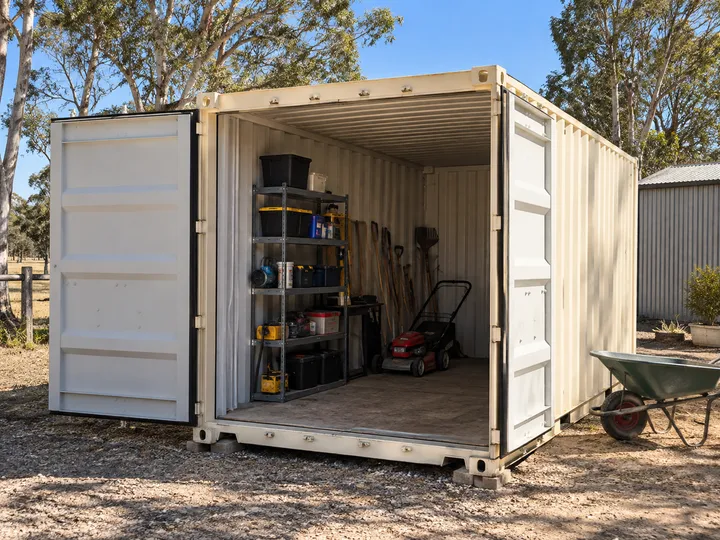
Choose space your crew can actually use
List the items that will stay on site and the ones that come and go. Include packed dimensions: a boxed fitting, wheeled tool chest or long bundle may need more room than the item alone. Mark out shelves and a walking aisle before settling on a size.
A 10ft container may suit a compact tool store where space is limited. A 20ft gives more room to separate tools from materials. Consider a 40ft for longer or bulkier supplies after checking the footprint and truck access. Compare internal dimensions and door openings; floor space alone does not tell you whether equipment fits.
Keep frequently used gear within reach rather than behind supplies for a later stage. Shelving, heavy equipment and concentrated loads need appropriately qualified assessment; nominal payload alone does not establish a safe layout.
Hire for a project or buy for repeat work
For one build, discuss container hire. Give expected start and finish dates, and ask about the hire period, extension terms, collection and availability. Explain any uncertainty in the programme before booking.
For ongoing work, compare a purchase quote with hire. Include delivery and later transport in the decision. Tell us if the container will move between projects: each move needs its own access and transport assessment.
Match the condition to the contents
Ask about the actual unit’s doors, seals and floor, especially for tools or boxed materials left overnight. Watertight claims apply to cargo-worthy used and new single-trip grades only; as-is units are not sold watertight. Single-trip containers have already made a shipping journey and may have handling marks.
A watertight container is not climate-controlled. Damp tools and wet materials introduce moisture, and temperature changes can cause condensation. Check storage instructions for sensitive goods before choosing ordinary container storage. Photos of the actual unit are available on request before delivery.
Plan locks and daily access together
Check the fitted locking hardware and whether your chosen lock fits the lock box. Decide who holds the keys, where the doors face and how the crew will reach them without blocking a work route. Keep the door area clear as deliveries arrive.
Lighting, visibility and control of site entry belong in the security plan too. No container or lock makes tools theft-proof. Check insurance requirements and read the locks and lock boxes guide before choosing hardware.
Keep delivery and collection access open
Access changes as a build progresses. A clear unloading area today may become a slab, scaffold zone or material stack later. Choose a position where doors stay usable, and plan a route for the transport team to assess for collection if you hire.
Send approach and placement photos, noting gates, turns, slopes, soft ground, overhead services and shared access. Tell us about site induction, delivery windows and who will meet the driver. Use the delivery access checklist to gather details; the transport team must confirm vehicle and unloading arrangements.
Confirm placement and intended use with the site manager, property owner and relevant council. Ground preparation, supports, anchoring and structural changes need site-specific professional advice.
Separate ordinary storage from specialist uses
Do not assume a tool store suits fuels, chemicals, battery charging or workshop activities. Discuss the goods and intended use with a competent adviser to establish suitable storage. Specialist storage may be required.
Ask for a quote that fits the worksite
Use the form below with your delivery suburb, buy or hire preference and a size if you know it. “Not sure yet” is fine. In the optional notes, describe your tools and materials, project duration and access restrictions so the container and delivery quote reflects the job.